
Mobile journalism – an introductory course

The course is intended for all journalists who want to independently create journalistic content. By explaining the techniques and best practices for creating contents through a mobile phone, journalists will be prepared independently, without any help to create engaging stories, visually powerful videos, interviews and publish them on any medium.

Aleksandar Manasiev

All modules consist of short video lessons, accompanying text, but also additional materials and tasks. We will cover practical concepts that you can immediately start using in your work.

During the enrolment, please enter your full name as that will be the information written on your certificate.

Free course

You will be redirected to an external website

Module 1 –  Introduction to mobile journalism
Module 2 – Advantages of mobile journalism
Module 3 – Photography
Module 4 – Video
Module 5 – Audio recording
Module 6 – Montage on a mobile phone

In this course you will learn:

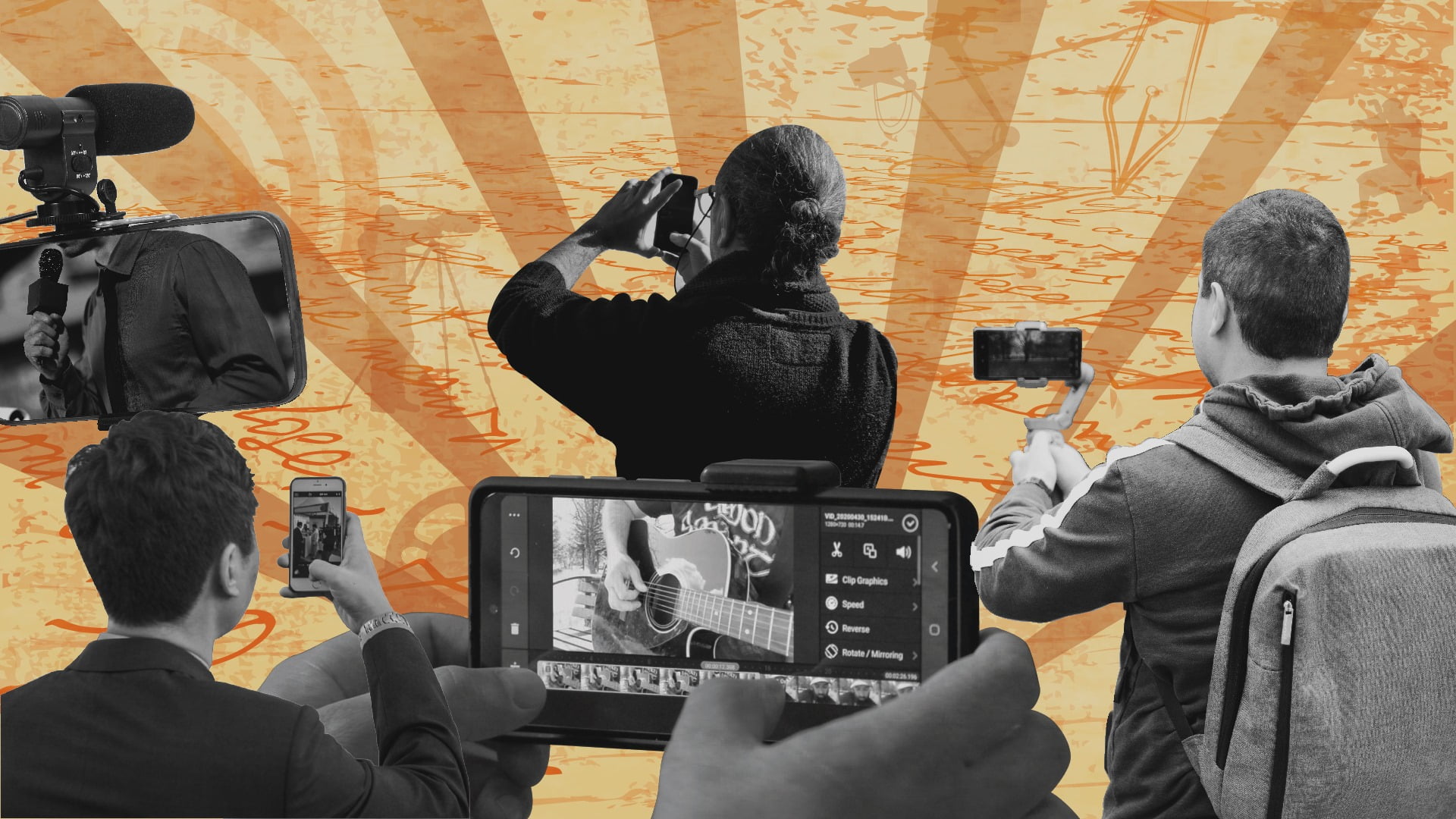
Mobile journalism means freedom. With your mobile phone, you can easily create media content anywhere. Creating quality journalistic content with a mobile phone as the main tool has not yet completely covered the Balkans. Mobile phones are an important tool for journalists, but most of the major Balkan media do not make full use of their potential and ability to create powerful video contents. And there is a great opportunity, not only for every media, but also for every journalist.

The course is intended for all journalists who want to independently create journalistic content. By explaining the techniques and best practices for creating contents through a mobile phone, journalists will be prepared independently, without any help to create engaging stories, visually powerful videos, interviews and publish them on any medium.

COURSE CONTENT:

  • Module 1 – provides an overview of the course and explains the concept of mobile journalism.
  • Module 2 – describes the benefits of mobile journalism and the equipment needed to complete this course.
  • Module 3 – describes the first aspect of mobile journalism – photography and how to create a powerful photo using a mobile phone.
  • Module 4 – explains the second element of mobile journalism – video and how to create quality video content using a mobile phone.
  • Module 5 – is dedicated to recording quality audio with the help of a mobile phone.
  • Module 6 – explains the last part – editing news articles on a mobile phone with the help of a free application.

For this course you will need about 4 hours to complete it through multiple sessions.

Teachers in this course:

Aleksandar Manasiev

Journalist

Aleksandar Manasiev is an award-winning journalist from North Macedonia with more than 17 years of experience in print media, TV and digital media. He has experience as an investigative journalist, correspondent and editor in chief in several media outlets in the region and beyond. He also works as a regional trainer for mobile journalism, digital media and investigative journalism.

Andrija Vučković

Teacher of innumerable wisdoms

Lorem ipsum dolor sit amet, consectetur adipiscing elit. Duis vestibulum lectus condimentum turpis cursus, sit amet porta ipsum pulvinar. Class aptent taciti sociosqu ad litora torquent per conubia nostra, per inceptos himenaeos. Quisque sollicitudin vestibulum nunc a euismod. Nullam venenatis ultrices nibh ac tincidunt. 

Other Courses:

Ewen MacAskill
This course is designed to teach advanced techniques for telling stories, with tips and insights from leading journalists. You will be shown different ways to tell a news story and receive expert advice about on-the-scene reporting.
Aleksandar Manasiev
Through the course you will learn how the world of media changes under the influence of technology, how the habits of the audience change, what content you need to create and how to adapt it in order to monitor in different platforms.
Aleksandar Manasiev
The course is intended for all journalists who want to independently create journalistic content. By explaining the techniques and best practices for creating contents through a mobile phone, journalists will be prepared independently, without any help to create engaging stories, visually powerful videos, interviews and publish them on any medium.
Catherine Mackie
Every journalist wants their audience to trust them. In return the audience expects their journalist to be accurate, fair and impartial. Throw artificial intelligence (AI) into the mix and things can get trickier if you’re not prepared. AI-tools are hugely beneficial to so many newsrooms but they come at a cost. The cost, if you don’t have the right policies in place, can be reputational damage, legal trouble and damage to audience trust. So if you’re using AI or you plan it’s time to take the ethical approach.